A pool that turns green after rain or strong wind can feel as if it changed overnight. Usually, the weather is the trigger rather than the only cause. Rain can dilute and shift water chemistry, wind can add large amounts of organic debris, and a filter already close to its limit may suddenly struggle to keep up.
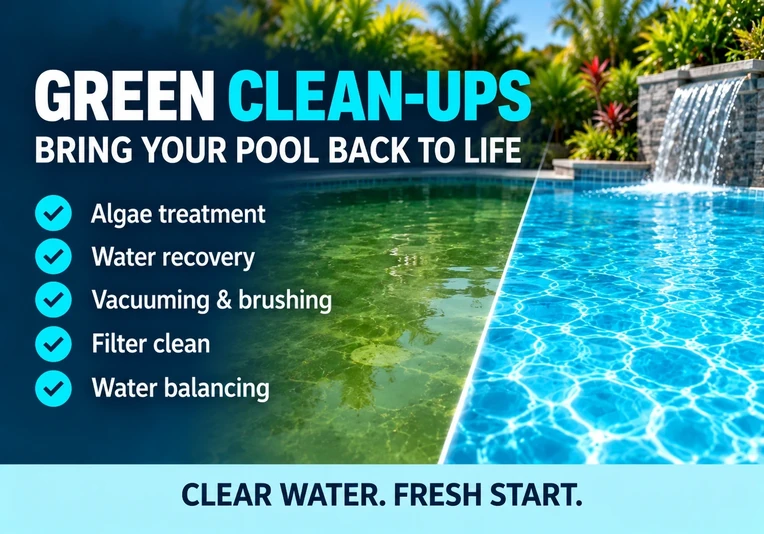
The fastest recovery comes from treating the pool as a complete system. Pool Crew’s green pool clean-up service combines physical cleaning, water correction, circulation and filtration rather than relying on one large chemical dose.
What pushes a clear pool toward green water?
Algae gains ground when sanitiser, circulation and filtration fall behind the biological load entering the water. Leaves, soil, pollen, insects and swimmer contamination all consume sanitiser. Warm water and sunlight add pressure. A blocked basket or weak pump reduces the amount of water passing through the filter.
The CDC home-pool testing guidance explains the relationship between disinfectant and pH, and why regular testing matters. It is a useful reminder that “chlorine in the pool” is not the same as “chlorine working effectively”.
Rain can dilute; wind can overload
After significant rain, water volume increases and chemistry can shift. After strong wind, the pool may collect more dirt in a few hours than it normally sees in days. If the skimmer basket fills, flow falls. If debris sinks, it becomes more work for the cleaner and filter.
That is why our coastal pool care guide focuses heavily on removing debris early and checking circulation after windy conditions.
Why “just shock it” is not a complete plan
Shock treatment can form part of a recovery, but it does not physically remove leaves, brush algae off surfaces, clear a blocked filter or repair a weak pump. If pH is badly out of range, a dose may also work less effectively than expected.
Start with a test, inspect the circulation system and remove as much organic material as possible. Follow the chemical manufacturer’s label. If you use retail pool products, official resources from hth South Africa and Africhem provide product-specific guidance.
Brushing matters because algae clings to surfaces
Walls, steps, corners and behind ladders can develop a thin biofilm that circulation alone does not remove. Brushing exposes algae to treatment and moves material into suspension so it can be filtered or vacuumed out. This is one reason a pool can remain green even when the water has been heavily dosed.
Filtration determines how quickly the pool clears
Killing algae and removing it are separate jobs. Once algae is damaged, the filter must capture a large load of fine material. If the filter pressure rises, flow falls or the media is exhausted, the pool can remain cloudy for much longer.
Read our filter troubleshooting guide if the water stays cloudy, pressure is unusually high or filter sand appears in the pool. For repairs, see filter installation and repairs.
A practical green-pool recovery sequence
- Remove leaves and large debris.
- Empty baskets and confirm the pump is circulating properly.
- Test the water before dosing.
- Correct water balance as required for the treatment being used.
- Brush walls, steps, corners and floor thoroughly.
- Apply the appropriate algae/sanitising treatment according to product instructions.
- Run and monitor filtration, cleaning/backwashing as required.
- Vacuum settled material and retest.
Severe pools may need this cycle repeated. If the pump cannot maintain flow, the recovery should pause long enough to address the equipment fault rather than pouring more product into water that is not circulating.
How to stop the same green-pool problem returning
The answer is usually routine rather than stronger chemicals: consistent cleaning, reliable pump runtime, a healthy filter and testing that responds to weather and swimmer load. Compare our weekly, bi-weekly and monthly cleaning plans to see what frequency may suit your pool.
If you want help now, send photos through Pool Visualiser or book a green pool recovery.
Useful external references
Talk to Pool Crew
For weekly, bi-weekly or monthly pool cleaning, a major or once-off clean, green pool recovery, pump or filter work, leak detection or general pool help in Port Elizabeth, speak to our team.