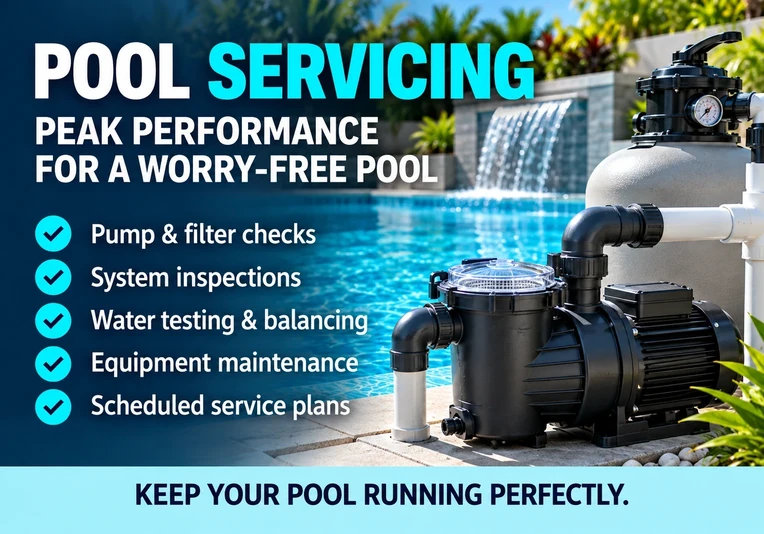
Pool maintenance becomes much easier when it is treated as a checklist instead of a reaction to whatever went wrong that week. The exact routine varies by pool, but the same categories keep appearing: debris, water level, chemistry, circulation, filtration, surfaces and equipment.
This guide is designed as a practical framework for home pools. If you prefer professional support, Pool Crew offers pool servicing and regular pool cleaning.
Every time you walk past the pool
- Look at water clarity and colour.
- Notice whether the water level looks normal.
- Check for unusual noise from the equipment area.
- Look for obvious leaks or wet patches.
These quick observations are valuable because you know what “normal” looks like. A subtle change noticed early can be more useful than waiting for a complete failure.
Weekly cleaning tasks
- Skim leaves and floating debris.
- Empty the skimmer and pump baskets.
- Brush walls, steps, corners and waterline areas.
- Vacuum or run the appropriate cleaner.
- Check return flow and circulation.
If local wind adds debris quickly, you may need these tasks more frequently. See our coastal pool care guide for wind-specific advice.
Water testing
Test according to pool usage, weather, equipment and product instructions. The CDC home-pool guidance explains why disinfectant and pH are core measurements and how pH affects sanitiser performance.
Do not use colour and smell as substitutes for testing. Clear water can still be out of balance.
Filter checks
Know the pressure when the filter is clean. Watch for meaningful increases in pressure and reductions in return flow. Clean or backwash according to the filter type and manufacturer guidance.
For cloudy water, pressure changes or sand returning to the pool, use our filter troubleshooting guide.
Pump checks
Inspect for leaks, air under the pump lid, unusual vibration or noise, overheating and difficulty priming. Clean baskets before they become heavily blocked.
If something has changed, read pool pump warning signs or book pump repairs.
Water-loss check
Notice how often you are topping up. Evaporation changes with weather, but a persistent increase can indicate a leak. Our leak versus evaporation guide explains a simple comparison method.
The US EPA WaterSense guide also explains how covers reduce evaporation and can lower water use.
Monthly or periodic equipment inspection
- Inspect unions and valves for seepage.
- Check electrical covers for visible damage.
- Look for corrosion or moisture around the motor.
- Inspect salt chlorinator cells according to manufacturer guidance.
- Check cleaner hoses, diaphragms or wear items as appropriate.
Seasonal reset
Before heavy summer use, confirm the circulation system is healthy, the filter is ready, the cleaner works and the water can hold stable chemistry. If the pool has been neglected, book a major clean before peak use rather than trying to catch up while people are swimming every day.
Compare service frequencies in our weekly versus bi-weekly cleaning guide.
Problems that should not wait
- Rapid water loss.
- Electrical tripping or burning smells.
- Severe pump noise or no circulation.
- Cracks or movement that appear to be progressing.
- Very cloudy or green water where swimmers cannot see the floor clearly.
For a broad overview of what we can help with, visit Pool Crew services or send photos through Pool Visualiser.
Useful external references
Talk to Pool Crew
For weekly, bi-weekly or monthly pool cleaning, a major or once-off clean, green pool recovery, pump or filter work, leak detection or general pool help in Port Elizabeth, speak to our team.