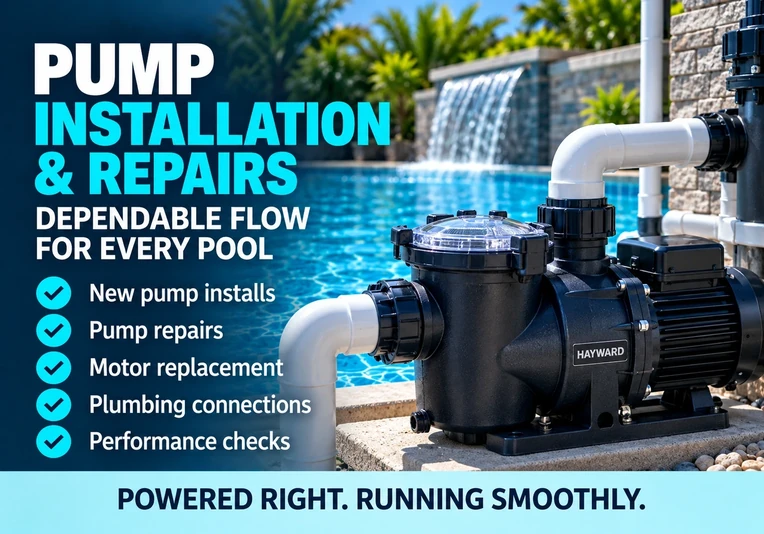
A pool pump rarely goes from perfect to dead without any warning. Most failures are preceded by changes in sound, flow, priming, leakage, temperature or behaviour. Learning those signs can save the motor, protect the filter and prevent a clear pool from becoming a circulation problem.
Pool Crew handles pool pump installation and repairs. Before replacing anything, we look at the whole hydraulic system because the pump is only one part of the circulation loop.
1. The pump is harder to prime
If the basket will not stay full of water, the pump repeatedly loses prime or you see a persistent air pocket under the lid, check pool water level, baskets, lid seals, valves and suction plumbing. Air entering on the suction side can reduce flow dramatically even when no water leak is visible.
2. Return flow is weaker than it used to be
Weak return flow can be caused by a blocked basket, dirty filter, closed valve, suction restriction, impeller blockage or pump problem. Do not assume the motor is too small until those simpler restrictions have been ruled out.
Because the filter and pump interact, our filter troubleshooting guide is worth checking at the same time.
3. The pump sounds different
Grinding, rattling, screeching and harsh vibration deserve attention. A high-pitched bearing sound is different from the gravel-like sound associated with cavitation. Cavitation can occur when the pump is not receiving enough water relative to what it is trying to move.
4. Water is leaking beneath the motor or housing
A mechanical seal, housing O-ring, drain plug or fitting may be leaking. Water around the motor is not something to ignore. Apart from water loss, moisture and electricity are a poor combination.
If the pool level is also falling, read pool leak or evaporation? and inspect all visible equipment before assuming the leak is underground.
5. The pump runs hot or trips electrically
Overheating, repeated tripping or a burnt smell needs professional attention. Electrical faults should not be diagnosed by opening live equipment unless you are appropriately qualified. A motor may overheat because of electrical problems, poor ventilation, failing bearings or hydraulic stress.
6. Air bubbles keep coming from the return jets
A few bubbles after startup can be normal. Persistent bubbles can indicate suction-side air entering the system. Check water level, the skimmer, pump-lid seal and visible suction fittings. If the issue continues, the plumbing may need a closer inspection.
7. The pump runs but the pool still struggles to stay clear
Runtime alone does not guarantee effective circulation. A pump can operate while moving too little water because of a restriction or worn hydraulic components. Poor circulation makes sanitising and filtration less effective and can contribute to algae in low-flow areas.
If the water is already deteriorating, see our green-pool recovery guide and pool cleaning service.
8. Energy use seems excessive
Older single-speed systems can use more energy than necessary when they run at one high speed for every task. The ENERGY STAR pool pump guidance explains why variable-speed pumps can be programmed for different flow requirements and can reduce energy use when correctly applied.
That does not mean every pool needs a variable-speed replacement. The best upgrade depends on the hydraulics, filter, cleaner and operating schedule.
9. The pump is becoming a repeated repair
One seal or bearing repair can make sense. Repeated failures on an old, inefficient or incorrectly sized unit may point toward replacement. At that stage, assess the filter and plumbing at the same time so the new pump is not installed into the same underlying problem.
How the pump, filter and cleaner should be considered together
Every component creates or responds to flow resistance. Pipe size, fittings, filter condition, cleaner requirements and return configuration all influence the operating point. This is why “fit the biggest pump” is poor advice.
When we source equipment, we use established pool-industry suppliers and brands. See our Pool Crew provider hub, including Fluidra Waterlinx, Zodiac and Quality Pool & Spa Products.
Useful external references
Talk to Pool Crew
For weekly, bi-weekly or monthly pool cleaning, a major or once-off clean, green pool recovery, pump or filter work, leak detection or general pool help in Port Elizabeth, speak to our team.