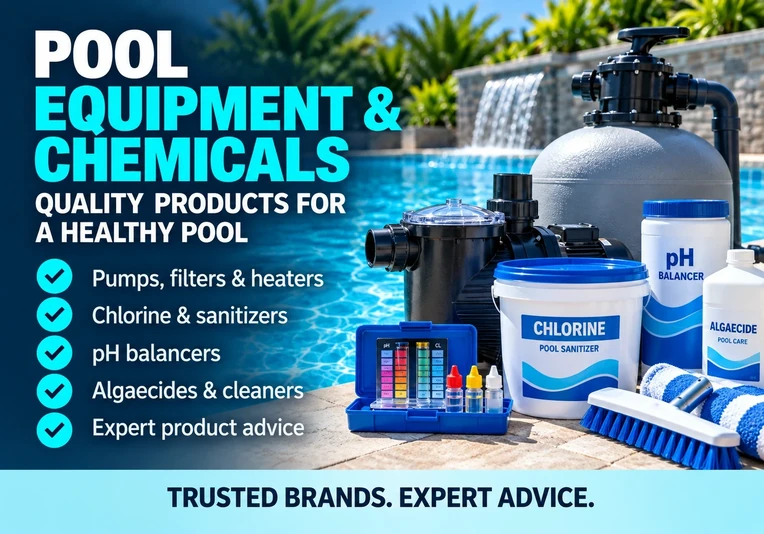
Pool equipment is easiest to buy badly when each component is considered in isolation. A powerful pump can overwhelm an undersized filter. A cleaner can perform poorly if suction is wrong. A salt chlorinator can underperform if circulation is inadequate. The system has to work together.
Pool Crew supplies and fits pool equipment and chemicals and works with established suppliers listed in our provider hub.
Choose the pump around the hydraulic system
Do not select a pump purely by horsepower. Pool volume matters, but so do pipe diameter, suction runs, fittings, filter resistance, cleaner requirements, water features and other equipment. The goal is enough flow for the required tasks without unnecessary energy use or pressure.
The ENERGY STAR pool pump guidance explains why variable-speed pumps can match different tasks with different speeds. For fault diagnosis before replacement, read nine pool pump warning signs.
Match the filter to the flow and debris load
A filter should have enough capacity for the pool and be compatible with the pump’s operating flow. Consider ease of cleaning, media availability and the level of fine debris the pool experiences.
If you already have a filter that is struggling, use our filter troubleshooting guide before replacing it. A plumbing restriction or weak pump can imitate a filter problem.
Automatic cleaners need the right operating conditions
Suction cleaners rely on stable suction and clean flow paths. Robotic and pressure systems have different requirements. Pool shape, steps, debris type and the owner’s preferred maintenance style all matter.
Kreepy Krauly is one of the established cleaner brands we reference, and the official Kreepy Krauly South Africa site provides manufacturer information.
Salt chlorinators must be sized for the pool
A chlorinator that is too small may need to run at high output for long periods, while an oversized system still needs correct control and water balance. Before converting, read our salt water versus chlorine guide and salt system service page.
Availability of spares matters
A cheaper component can become expensive if seals, baskets, valves or cells are difficult to source. We prefer equipment with practical support and compatible spares in the South African market.
Our provider pages explain how we work with Fluidra Waterlinx, Zodiac, Quality Pool & Spa Products and other recognised suppliers without claiming that every product suits every pool.
Buy for serviceability, not just specifications
Ask how easy the equipment is to isolate, open, clean and service. A well-planned plant room has accessible unions, sensible valves, drainage and enough space to remove lids or motors. Good installation can save significant labour later.
When to repair instead of replace
Seals, bearings, capacitors, valves and other service parts can sometimes restore equipment economically. Replacement makes more sense when the unit is repeatedly failing, badly mismatched, physically damaged or inefficient enough that a modern system offers a clear operational benefit.
What Pool Crew needs to recommend equipment
- Photos of the pool and equipment pad.
- Approximate pool dimensions.
- Existing pump/filter model labels where readable.
- Cleaner type and any water features.
- Current problems: weak flow, noise, cloudy water, leaks or high pressure.
- Whether you want to stay with chlorine dosing or consider salt.
Upload that through Pool Visualiser or contact us.
Useful external references
Talk to Pool Crew
For weekly, bi-weekly or monthly pool cleaning, a major or once-off clean, green pool recovery, pump or filter work, leak detection or general pool help in Port Elizabeth, speak to our team.